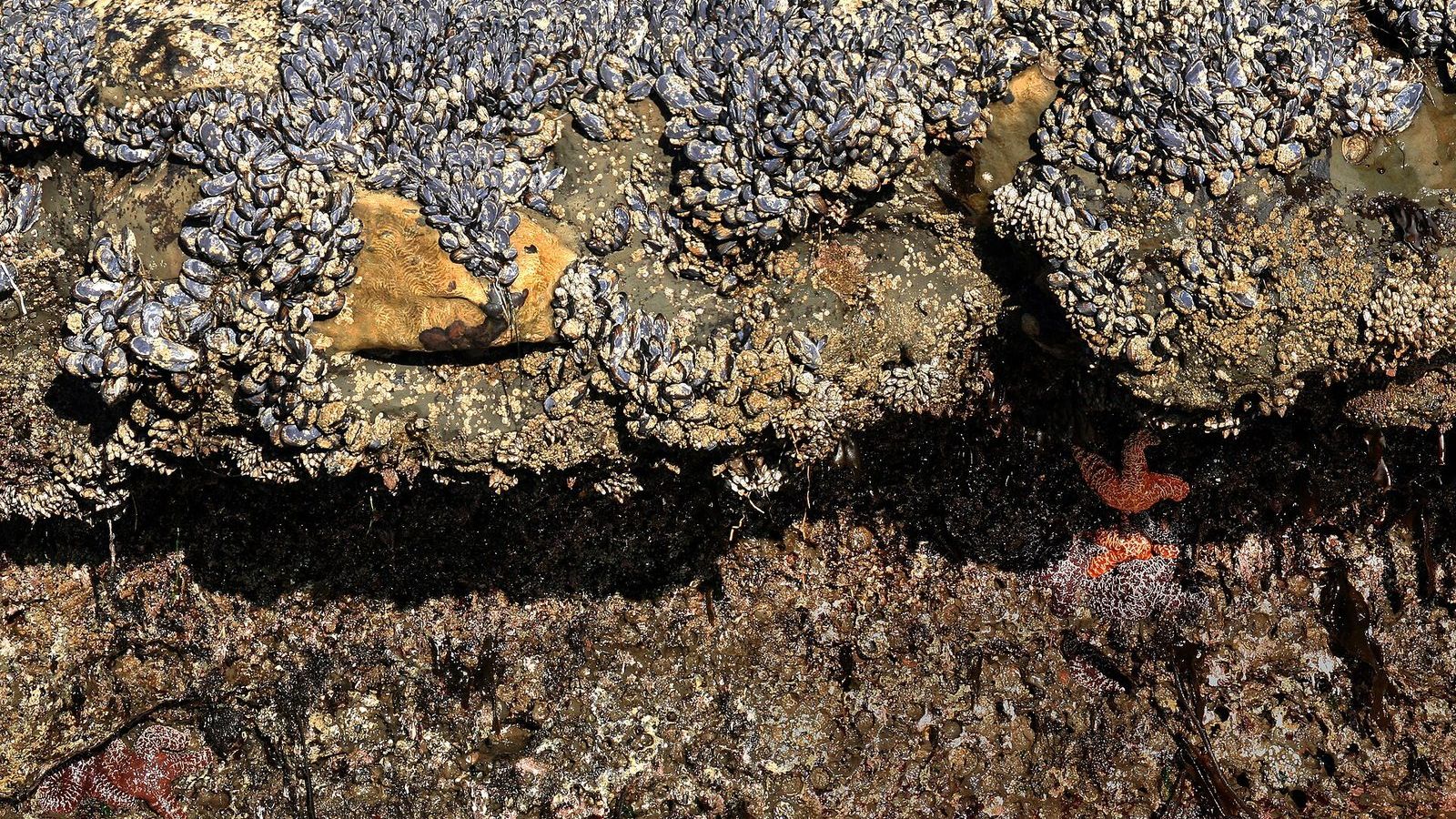
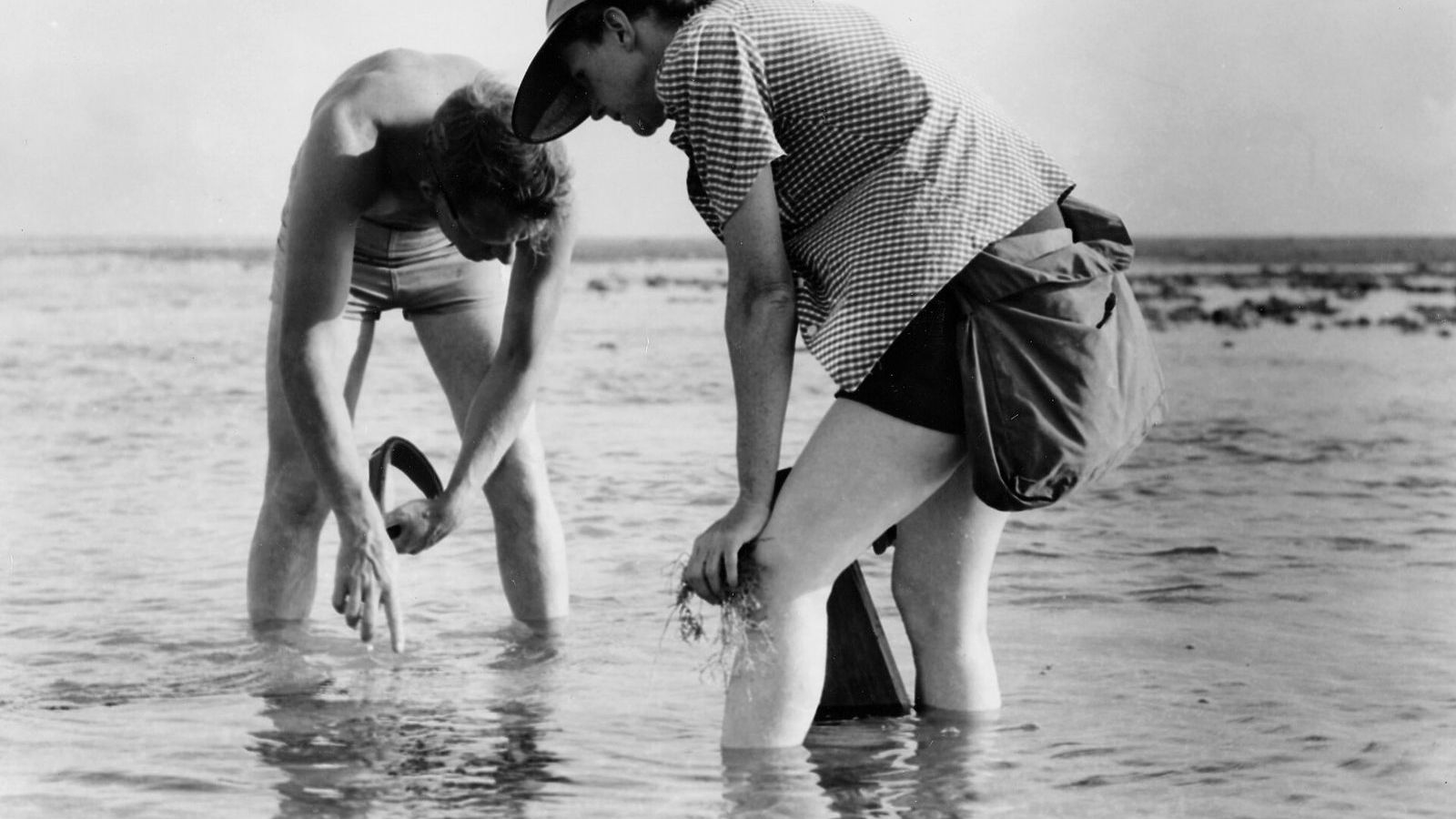
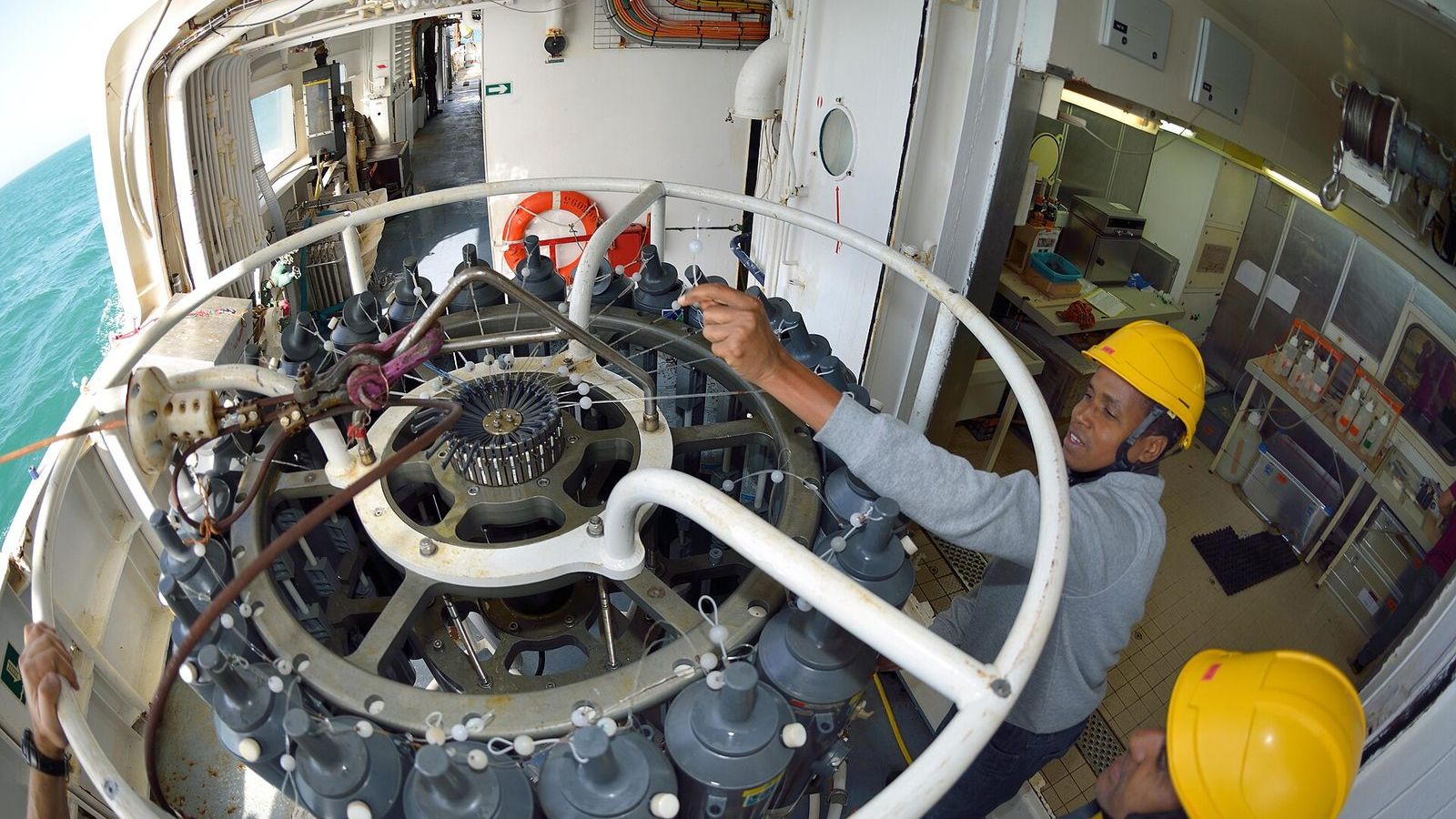
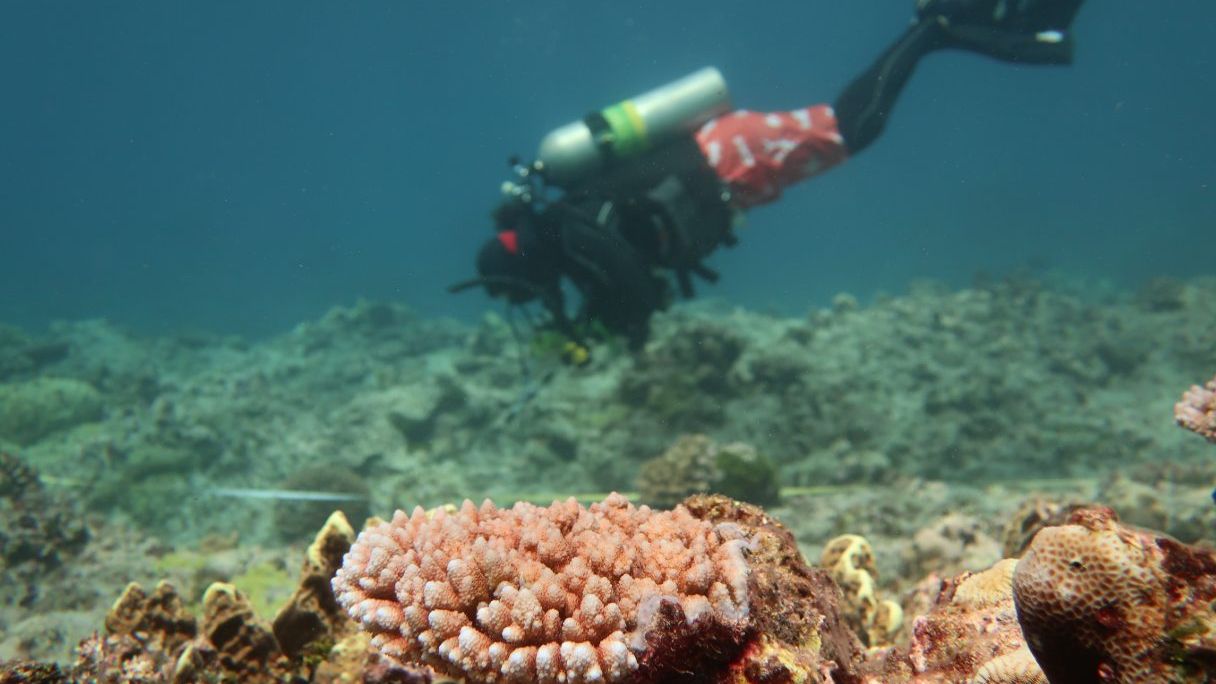
 Image: NOAA (uncredited) (public domain)
What you can do with a marine biology degree
The most common question we receive from parents is whether a marine biology degree leads to a job, and the honest answer is that it leads to several, few of which match the picture in the applicant's head. Most marine biologists spend most of their working lives at a desk. Some never go to sea at all. Here is what the jobs are, what each is like day to day, and what the numbers say about how many people end up in each.
The jobs
University research. A research group at a university or an oceanographic institute, led by a professor or a senior scientist, with postdoctoral researchers and doctoral students doing most of the work. The science is whatever the group's grants pay for, and the daily work is analysis, writing, teaching, and the hunt for the next grant. Field work is concentrated: a sea-going biologist might spend one to three months a year on a ship or at a field station and the other nine at a computer. Entry is through a doctorate, and the pay during the doctorate and the postdoctoral years is modest.
Fisheries and government agencies. Bodies such as NOAA Fisheries in the United States, Fisheries and Oceans Canada, or the national institutes that feed the International Council for the Exploration of the Sea in Europe employ the largest number of marine biologists in most countries. The work is stock assessment, survey cruises, data management, and advice to ministers, and the people who do it are the ones who decide how much fish may be caught. A master's degree is the usual entry, a doctorate helps for the modelling posts, and the statistics matter more than the biology.
Marine stations and aquaria. Public aquaria employ biologists as curators, animal husbandry staff, and educators, and the larger ones run research programmes. Marine stations, from Woods Hole and Friday Harbor to Roscoff and Heron Island, employ technicians, boat crews, and resident scientists. These are the jobs with the most hands-on time with animals, and they are competitive out of proportion to their pay.
Conservation and policy. Non-governmental organizations, from the large international ones to small coastal trusts, employ marine biologists to run monitoring programmes, write assessments, lobby for protected areas, and manage projects. The work mixes field surveys with a great deal of report writing and meetings, and the ability to explain a result to a minister or a fishing community counts as much as the ability to produce it.
Environmental consultancy. Any port, wind farm, pipeline, or coastal development needs an environmental assessment, and consultancies employ marine biologists to survey the seabed, count the birds and mammals, model the impacts, and write the reports. It is the sector that hires the most graduates straight from a first degree, it pays better than academia at the start, and it involves more real field work than most people expect, often in winter, in small boats.
Industry and technology. Aquaculture, which now produces more seafood than wild fisheries, employs biologists in fish health, breeding, and feed. The companies that build tags, sensors, autonomous vehicles, and environmental DNA tests employ biologists who understand what the instruments are for. Data science jobs in and around the field have grown fast, and a biologist who can program is hired for them.
How much time at sea
Less than the brochure suggests. A rough and honest split for a research marine biologist is one or two months a year in the field or at sea, one or two in the laboratory processing what came back, and eight or nine at a computer analysing, writing, and applying for money. Consultancy and agency survey staff spend more time out than that, perhaps a third of the year in some posts. Aquarium husbandry staff are with animals every day and almost never on a research vessel. If what you want is to be on the water, scientific diving, boat handling, and survey work are the routes, and they are skilled trades with their own training, such as the standards set by the American Academy of Underwater Sciences and its counterparts elsewhere.
The skills that get people hired
Ask any supervisor or employer in the field and the list is the same. Statistics, to the point of being able to fit a model and defend it. A programming language, R or Python, well enough to clean a dataset and make a figure. Geographic information systems, because most marine data are maps. Molecular laboratory methods, for the growing share of jobs that involve DNA. A scientific diving certificate and a small-boat licence for the field posts. And writing, which is the skill most often missing and most often the reason a good candidate is passed over. The biology itself is assumed.
The honest numbers
Most people who begin a doctorate in a biological science do not end up as professors, and marine biology is no exception. A 2010 report by the Royal Society in the United Kingdom, The Scientific Century, traced the careers of science doctoral graduates and found that about 3.5 per cent held permanent academic research posts and about 0.45 per cent became professors, while the large majority moved into careers outside university research, in industry, government, teaching, and elsewhere. The figures have not changed much since. In the United States the Bureau of Labor Statistics groups marine biologists with zoologists and wildlife biologists, a profession of about 18,000 people with a median pay of around 70,000 dollars a year, and projects slow growth; the O*NET profile lists the tasks and the typical qualifications.
None of this is a reason not to study the subject. It is a reason to study it with the exits in view: to take the statistics and the programming, to do a field or laboratory placement that produces a reference, and to choose the degree broadly enough that microbiology, genetics, or oceanography remain open. The professional societies, such as the Marine Biological Association in the United Kingdom and the Association for the Sciences of Limnology and Oceanography, publish careers pages and job boards that are worth reading early, long before you need them, because they show what the jobs actually ask for.
Where the masterclass fits
The Marine Biology Masterclass is a structured first survey of the field with a certificate at the end, and that is what it is for: finding out, in sixteen weeks, whether this is the subject you want to spend a degree on, and arriving at university knowing what a Redfield ratio and a stock assessment are. The pathway page maps the units to the career routes above, from fisheries science to deep-sea biology, and lists the field stations and student programmes that take undergraduates. The full outline of the units is in the curriculum.