 Image: Brocken Inaglory (CC BY-SA 3.0)
How to start learning marine biology in high school
Nobody studies marine biology at school, and that is the first thing to understand. The subject is built on biology, chemistry, mathematics, and physics, and every university that teaches it starts from those four. A sixteen-year-old who wants to work on coral reefs or whales has three or four years in which the most useful thing to do is to get good at the general subjects and to spend time on a shore with a notebook. This post is about how to do both well.
The subjects that matter
Biology is the obvious one, and the parts that matter most are the ones that feel least marine: cell biology, genetics, evolution, and ecology. A reef biologist spends more time on gene expression and statistics than on fish names. Chemistry comes next, because seawater is a solution and almost every question about it, from oxygen to acidification to the nitrogen cycle, is a chemistry question. Mathematics is the subject most often dropped by students who think of themselves as "biology people", and it is the one admissions tutors and research supervisors complain about most. Keep it as long as you can, including statistics. Physics explains light in water, pressure, sound, and currents, and the unit on seawater in the masterclass is physics from start to finish.
Two more things are worth starting early. The first is a programming language, and R or Python will do; a student who can load a data file and plot it is ahead of half of a first-year university cohort. The second is English, if it is not your first language, because the scientific literature is written in it.
Competitions
The International Biology Olympiad has run every year since 1990 and now draws teams from about 80 countries. You reach it through your national biology olympiad, which usually starts with a written round open to any school student. The questions are harder than the school syllabus and reward exactly the general biology described above, and the preparation is useful whether or not you get past the first round. Younger students have the International Junior Science Olympiad, for those under 16.
In the United States the National Ocean Sciences Bowl is a quiz competition for high school teams on ocean science, with regional rounds every winter, and it is the one competition that is marine from the outset. Elsewhere, national science fairs are the route for a student with a project of their own, and the projects that do well are small, measured, and honest about their errors.
A first field project
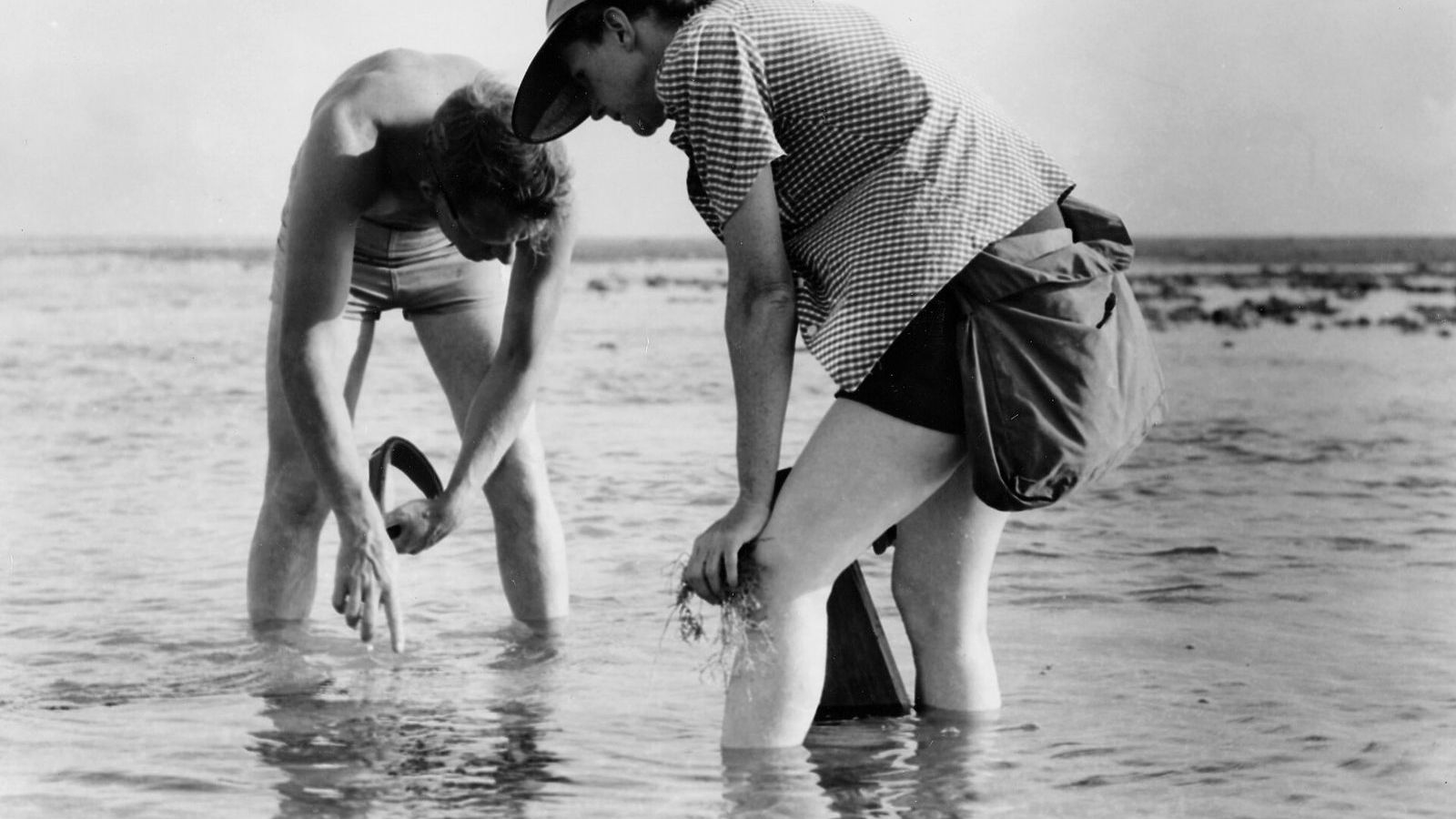
The rocky shore transect is the classic. Choose a shore with rock, go at a low spring tide, and lay a tape measure from the high-water mark straight down to the water's edge. Every metre, or every half metre on a steep shore, put down a square frame of 50 cm by 50 cm and record what is inside it: barnacles as a percentage of cover, limpets and snails counted, each seaweed as present or absent. Note the height above the water with a cheap level or by timing against the tide table. Repeat on a different shore, or on the same shore in a different season.
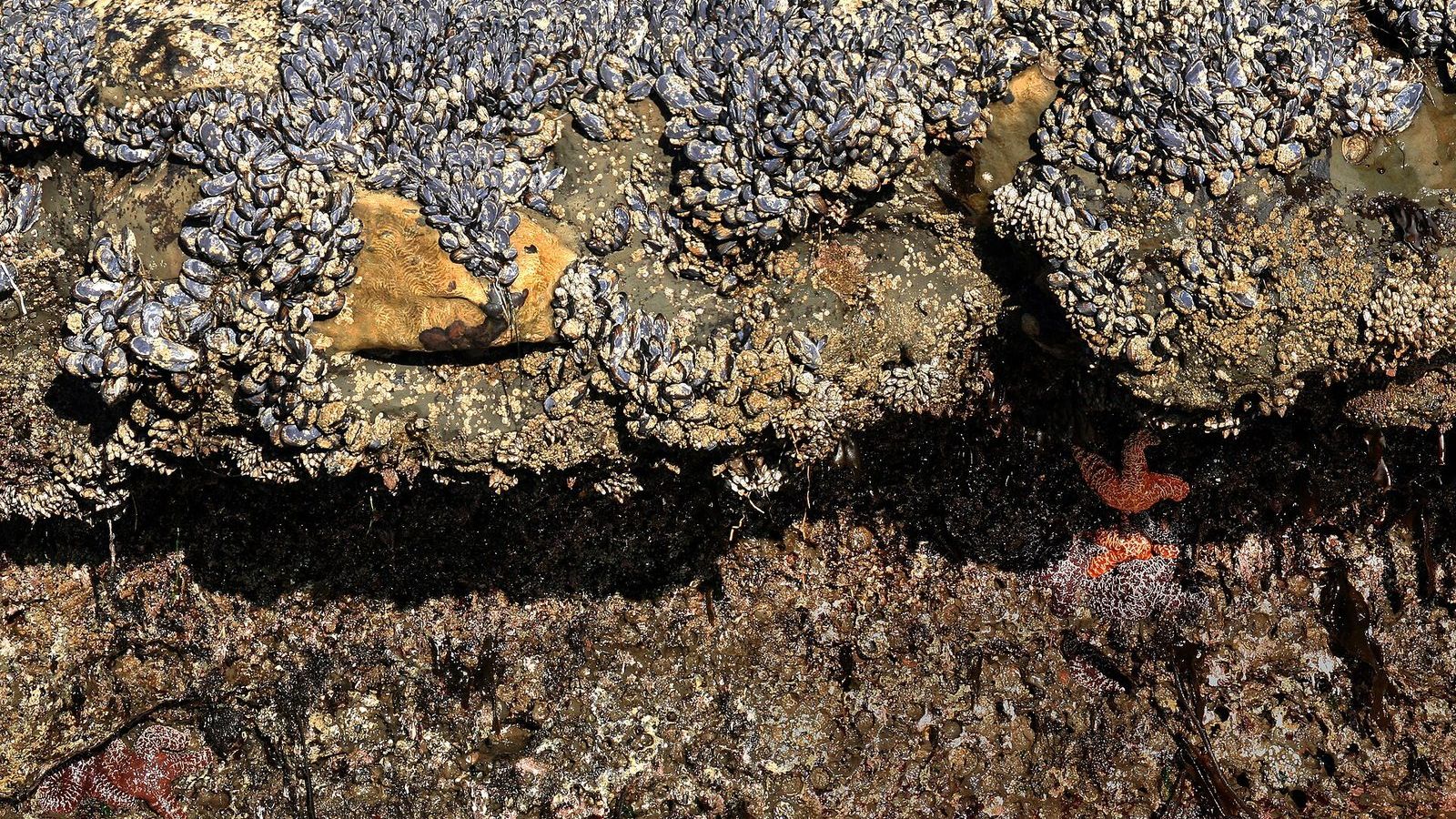
What you get is a picture of zonation, the horizontal banding of life on a shore, and a dataset small enough to plot by hand and large enough to argue about. The same method, with better frames, is what Joseph Connell used on the Isle of Cumbrae in 1961 and what every intertidal ecologist has used since. Unit 7 of the masterclass explains what sets the upper and the lower edge of each band.
If you live near a pier, a plankton tow is the alternative. A fine net with a mesh of about 100 micrometres costs less than a pair of trainers, and a jam jar of what it catches, under a school microscope or a phone with a clip-on lens, contains copepods, diatom chains, and the larvae of crabs and barnacles. Count what you see in a known volume and you have done, in miniature, what Victor Hensen did in 1887 when he invented the word plankton.
Whatever you find, put it on iNaturalist. A photographed record with a date and a position is a real observation, specialists will often confirm or correct your identification, and the records flow into the databases that researchers use.
The databases professionals use
Four of them are free, run in a browser, and are the same ones a working marine biologist opens every week. The World Register of Marine Species is the list of every accepted marine species name. FishBase has a page for every one of more than 35,000 fish species, with size, depth, diet, and growth. OBIS maps more than a hundred million records of where marine species have been found. NASA Worldview shows today's satellite view of sea-surface temperature and chlorophyll. The masterclass sends one such tool each week with instructions on what to try; the resources page lists them.
Diving, and when it is worth it
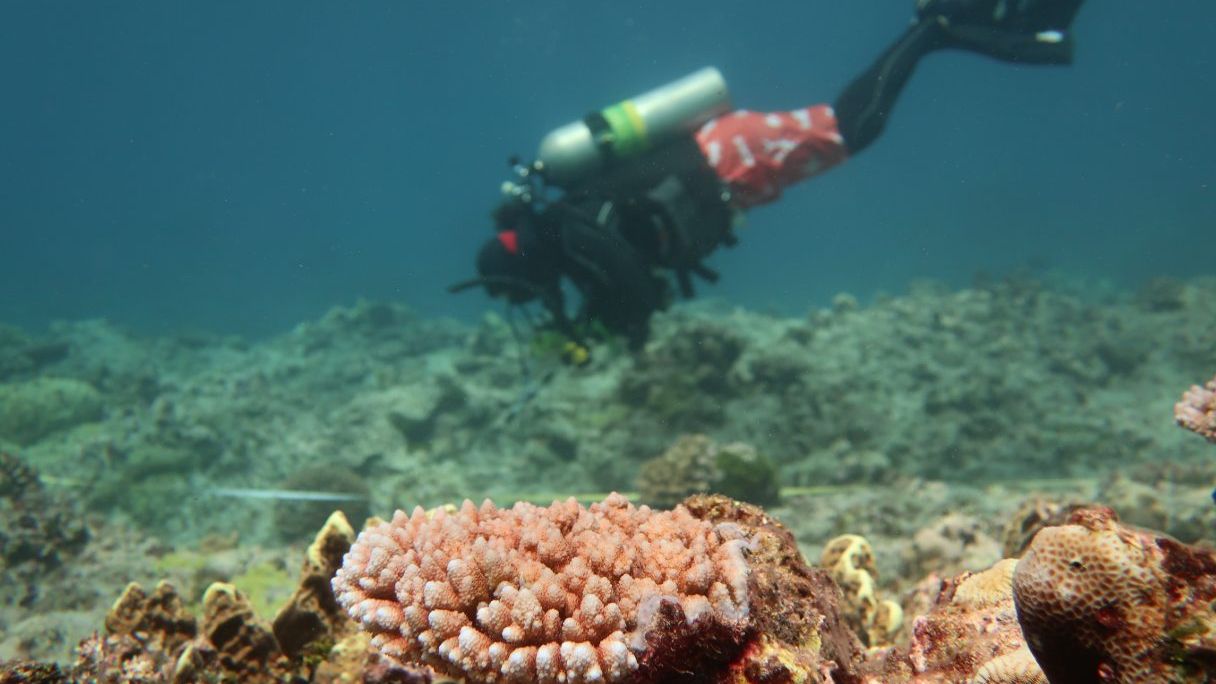
Many students assume a diving certificate is the first step. It is useful later and unnecessary now. A recreational open-water qualification can be taken from the age of ten to twelve in most countries, and it is a reasonable thing to do on a family holiday, but research diving needs a separate scientific diver training that universities provide to students who need it, usually in the second or third year of a degree. A student who arrives at university with 200 shore observations on iNaturalist has done more marine biology than one with 20 dives and no notebook.
What an admissions tutor looks for
The honest answer is grades in the four subjects, and after that, evidence of curiosity that went beyond the syllabus. A transect you did yourself, with the data and a plot, is that evidence. So is having read one real scientific paper and being able to say what its figure 2 shows, or having a question you cannot yet answer. Tutors are not impressed by a list of documentaries watched, and they are suspicious of a personal statement that uses the word "passionate" more than once.
Choose the degree broadly. A biology, zoology, or environmental science degree with marine options is often a better start than a narrow marine biology degree, because it keeps the door to genetics, microbiology, and oceanography open until you know which you want. The pathway page of the masterclass goes through the degree routes, the field stations that take students, and the skills research groups look for.
Where the masterclass fits
The Foundation masterclass is eight units at roughly the level of a first university semester, with the mathematics taught where it is needed. A school student with good biology and some patience for numbers can follow it, and the quizzes tell you honestly where you stand. It will not replace the four subjects. It will show you what they are for. The curriculum lists what each unit covers.