

The deep sea
The twilight zone and animals that make their own light, life on hydrothermal vents, trenches 10 kilometres deep, whale falls, and how the deep is explored.
Articles
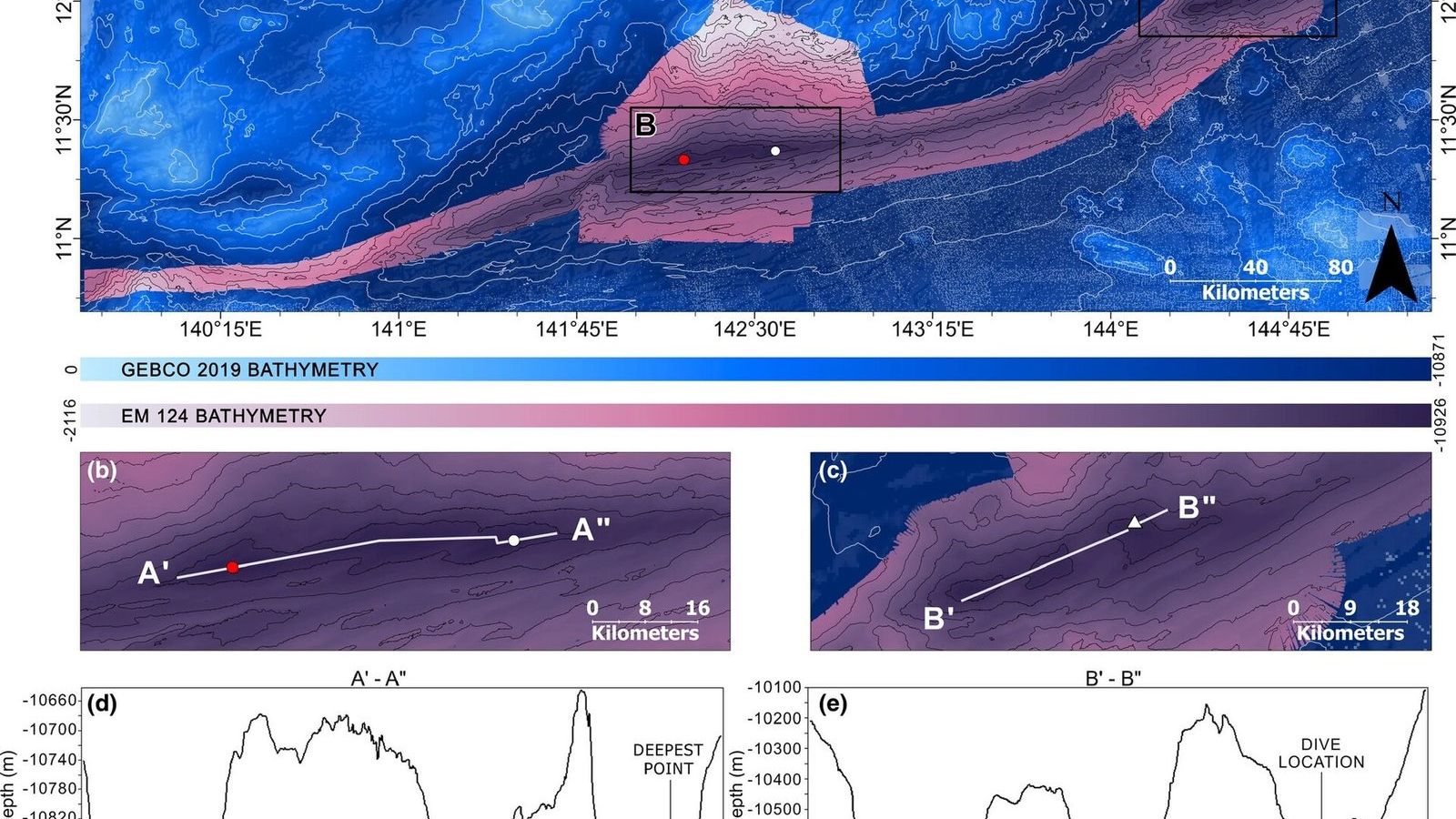
How much of the seafloor have we mapped?
A little over a quarter of the ocean floor has been measured by ship-borne sonar. The rest is known only from satellites, at a resolution that would miss a mountain the size of Snowdon.
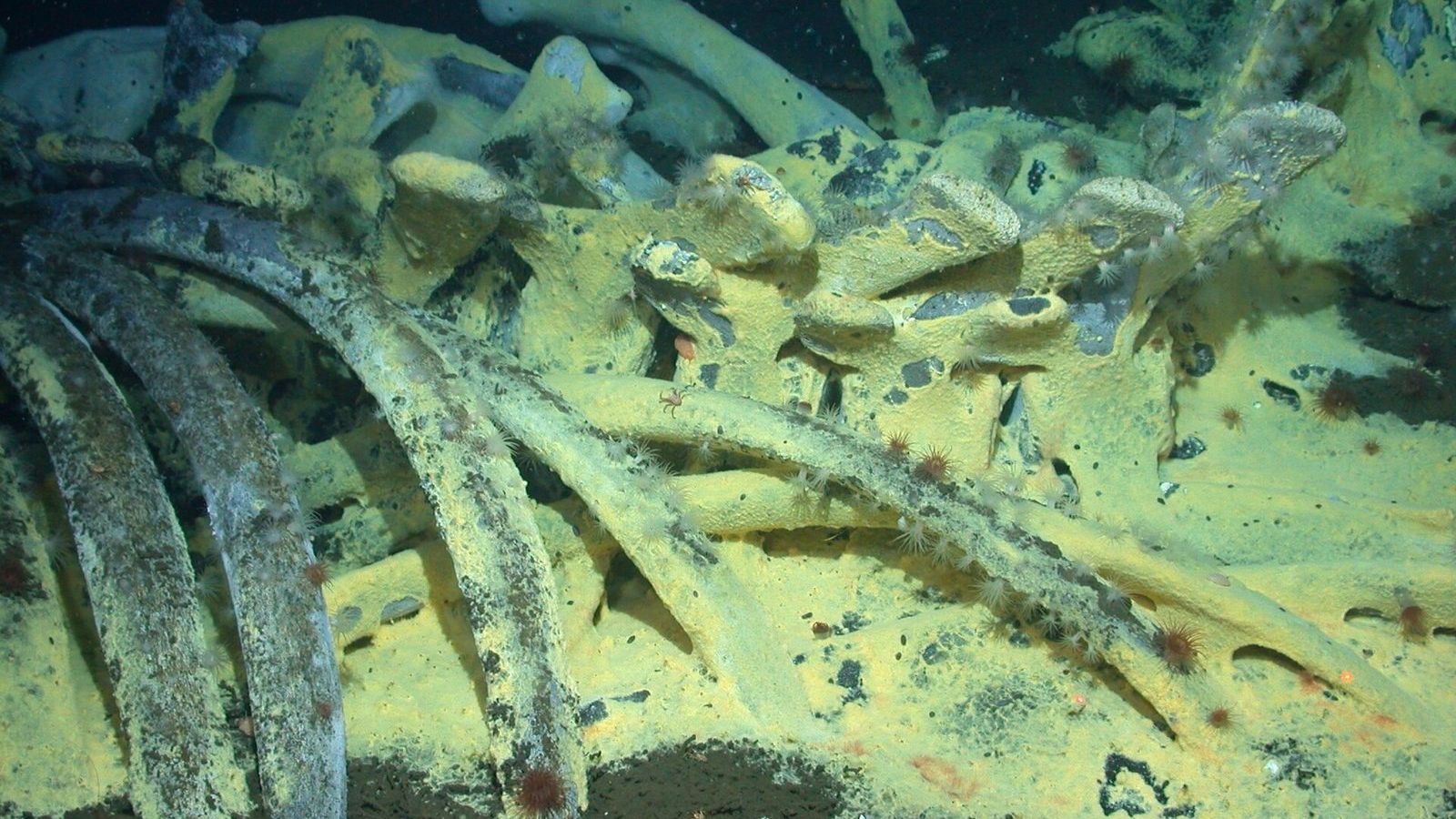
What a dead whale does for the deep sea
A whale carcass on the abyssal seafloor feeds a community for decades, in three stages, and it is home to a worm with no mouth that was only discovered in 2002.
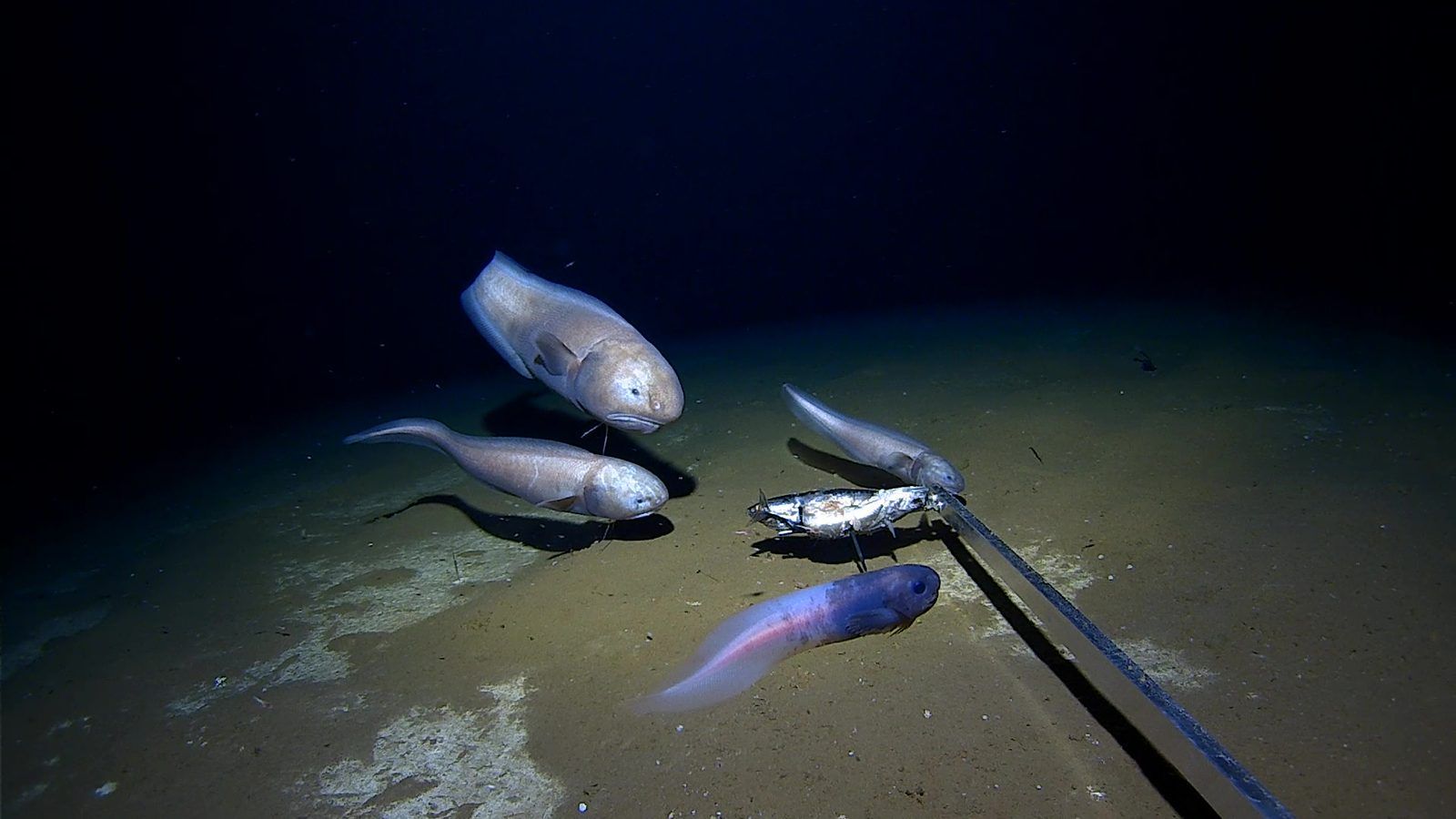
Why no fish has been found below about 8,400 metres
In August 2022 a snailfish was filmed at 8,336 m in the Izu-Ogasawara Trench, the deepest fish ever seen. Deeper water is not empty, but a small molecule in the fish's cells predicts that no fish will be found much lower.
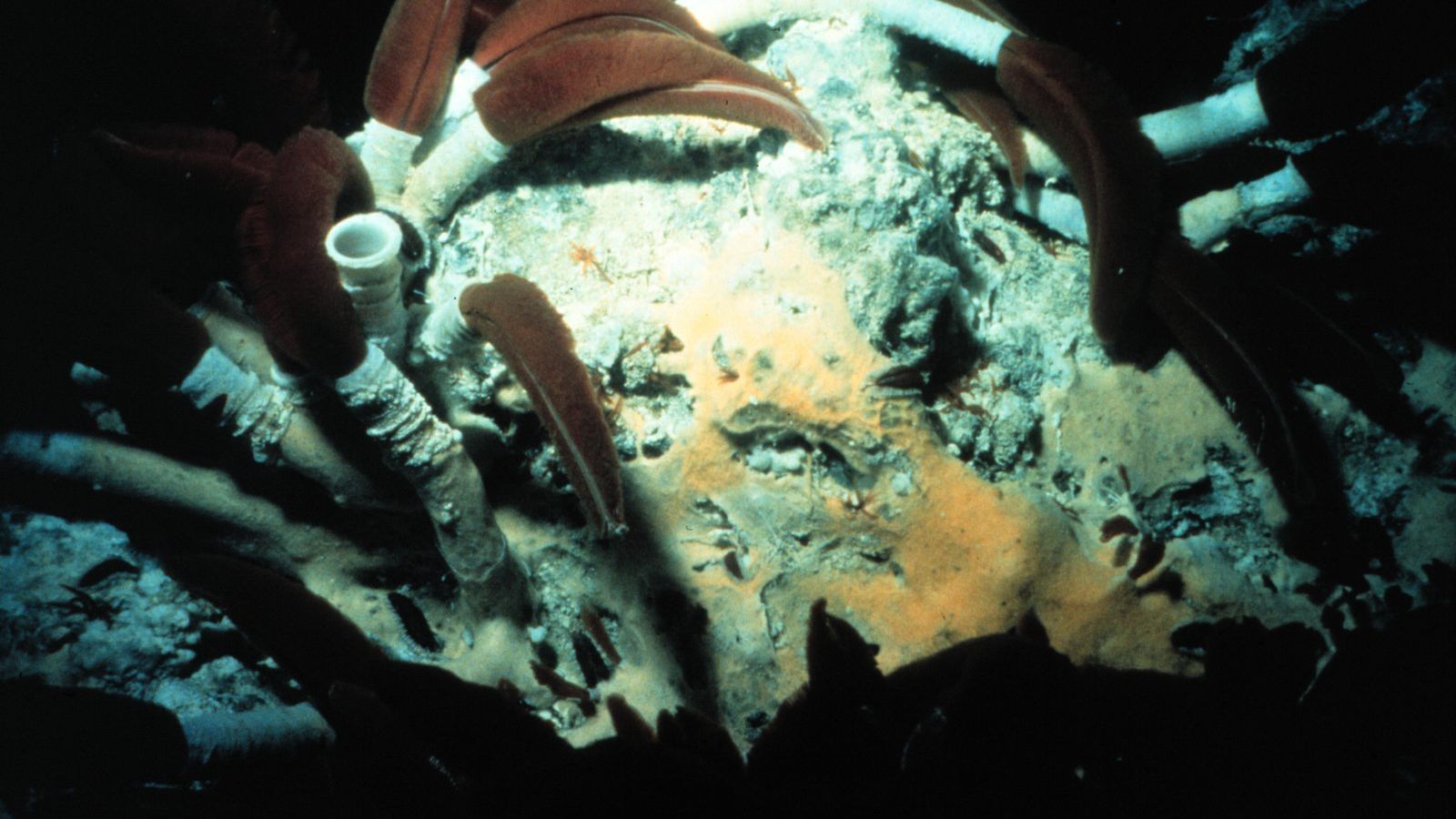
What lives on a hydrothermal vent, and what it eats
In 1977 geologists in a submersible found clams, crabs, and two-metre worms living on hot springs 2,500 m down, where no biologist had predicted life. The worms have no mouth and no gut.
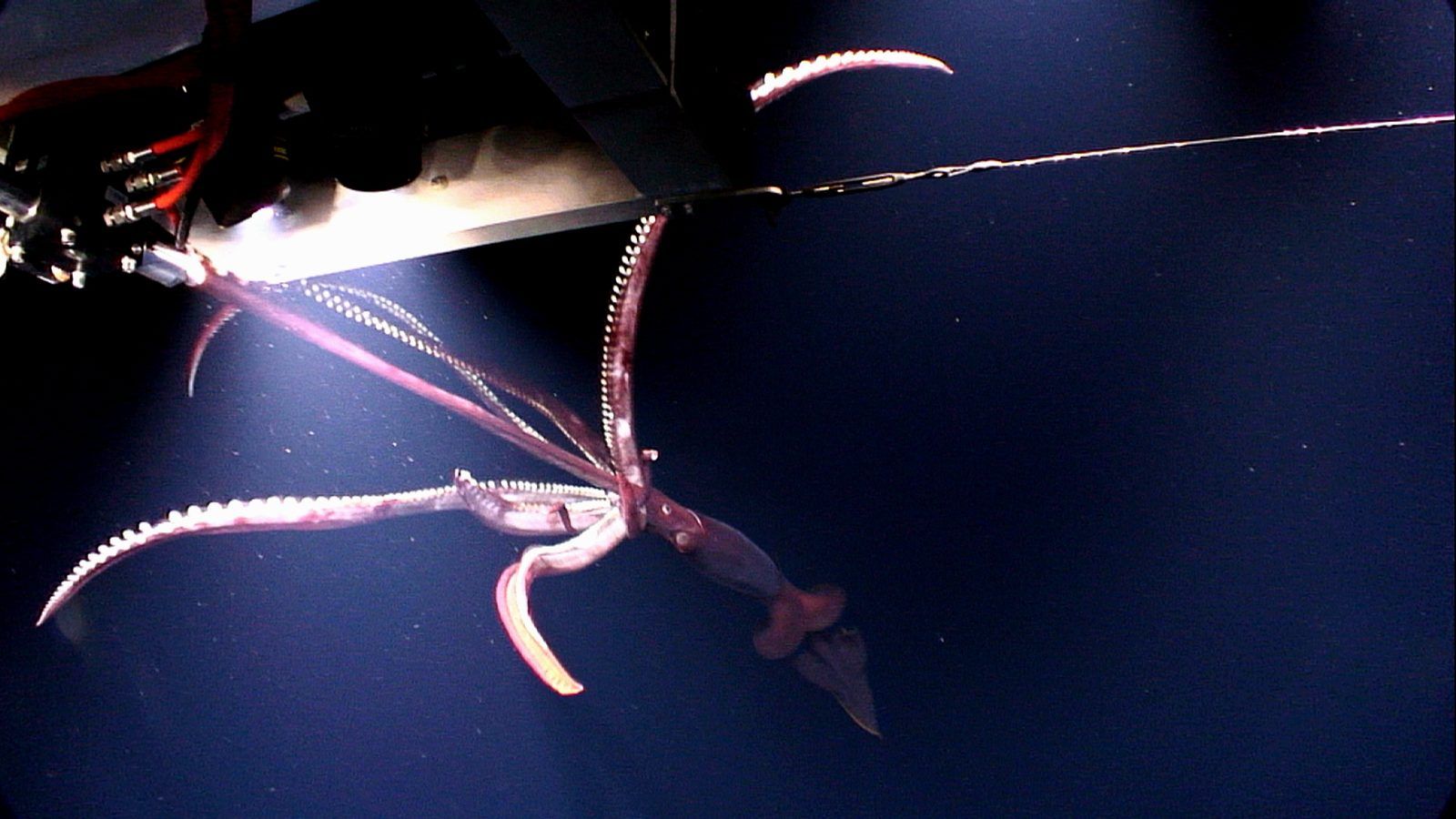
The largest migration on Earth happens every night
Every evening billions of tonnes of small fish, krill, and squid rise hundreds of metres towards the surface, and every dawn they go back down. Sonar found them by accident in 1942.
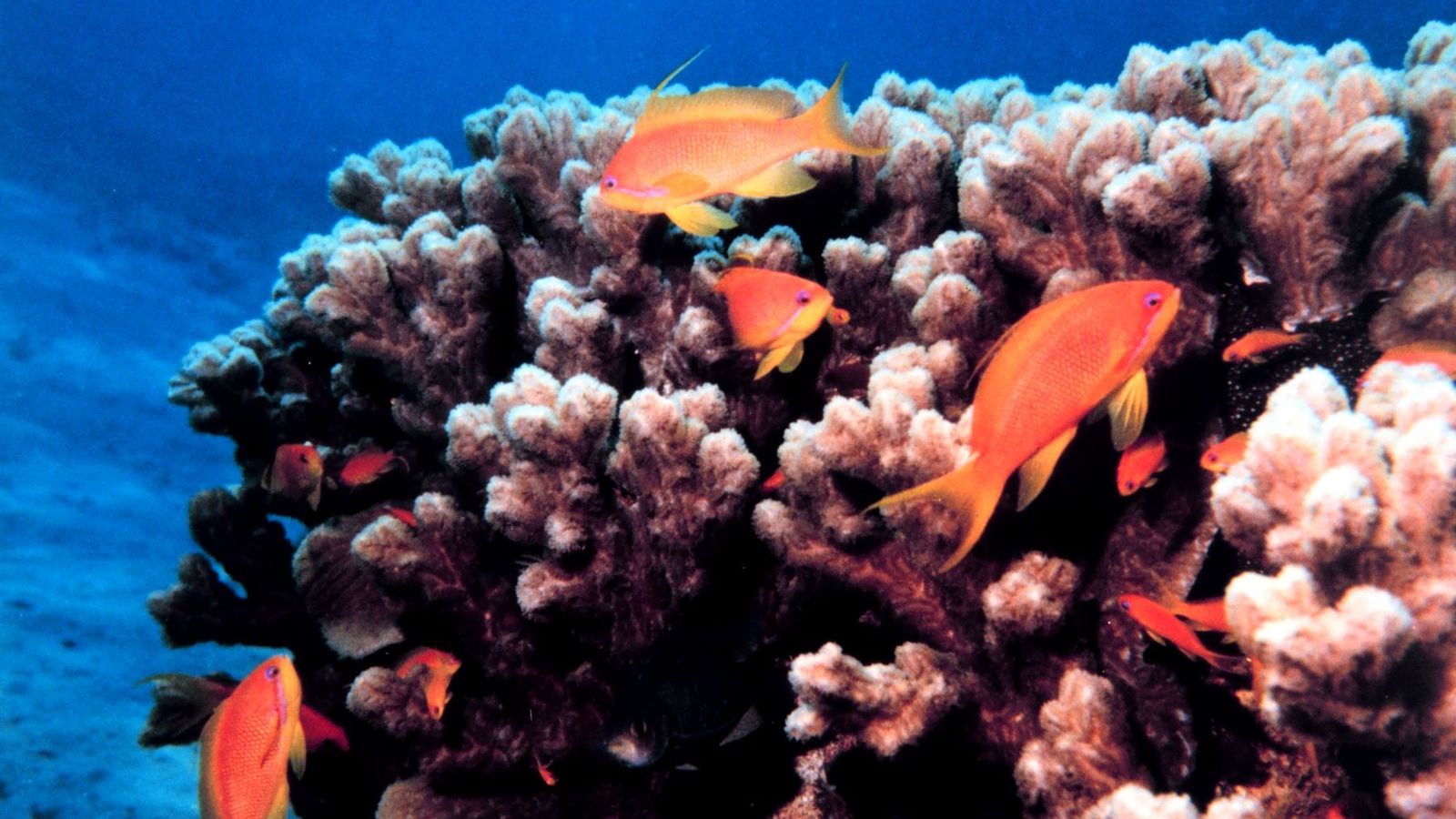
How many species live in the ocean?
About 251,000 marine species have a name. The best estimate of how many exist is about 2.2 million, and the way that number was reached says a lot about how biology counts.
In the masterclass
The Twilight Zone and Bioluminescence
The mesopelagic zone, the nightly vertical migration, and light made by living things
Hydrothermal Vents and Cold Seeps
Life on chemical energy at the hot springs of the ridges and the cold methane seeps of the margins
The Abyss and the Hadal Trenches
Life at high pressure and near-freezing temperatures, from marine snow to the deepest fish
Exploring and Protecting the Deep Sea
Sonar, submersibles, robots, and environmental DNA, and the evidence in the debate on deep-sea mining